
Summer camp video production
Enrollment films for sleepaway and day camps. We are based in Sullivan County, in the middle of camp country, and we have spent award-winning careers filming children in places far less forgiving than a lakefront.
Silver Telly
Fairview Lake YMCA Camps
4 Silver Tellys
Across one YMCA association
3 weeks
Touring abroad with students
Sullivan County
We are already up here
The real job
Most camp videos are a highlight reel. Kids on a zipline, a lake at golden hour, a counselor high-fiving somebody, all cut to an upbeat track. It looks like every other camp video, which is the problem.
The person watching is a parent, usually at night, usually anxious. They are not comparing activity lists. They are trying to work out whether their child will be alright with people they have never met, for weeks, somewhere they cannot get to quickly.
With sleepaway camps it is often bigger than that. Plenty of families use the session to travel, sometimes to another country, which means the parent is deciding whether they can be genuinely unreachable while their child is in someone else's care. That is not a question about ziplines.
A film that answers that question fills sessions. A film that shows a nice week does not.
How it started
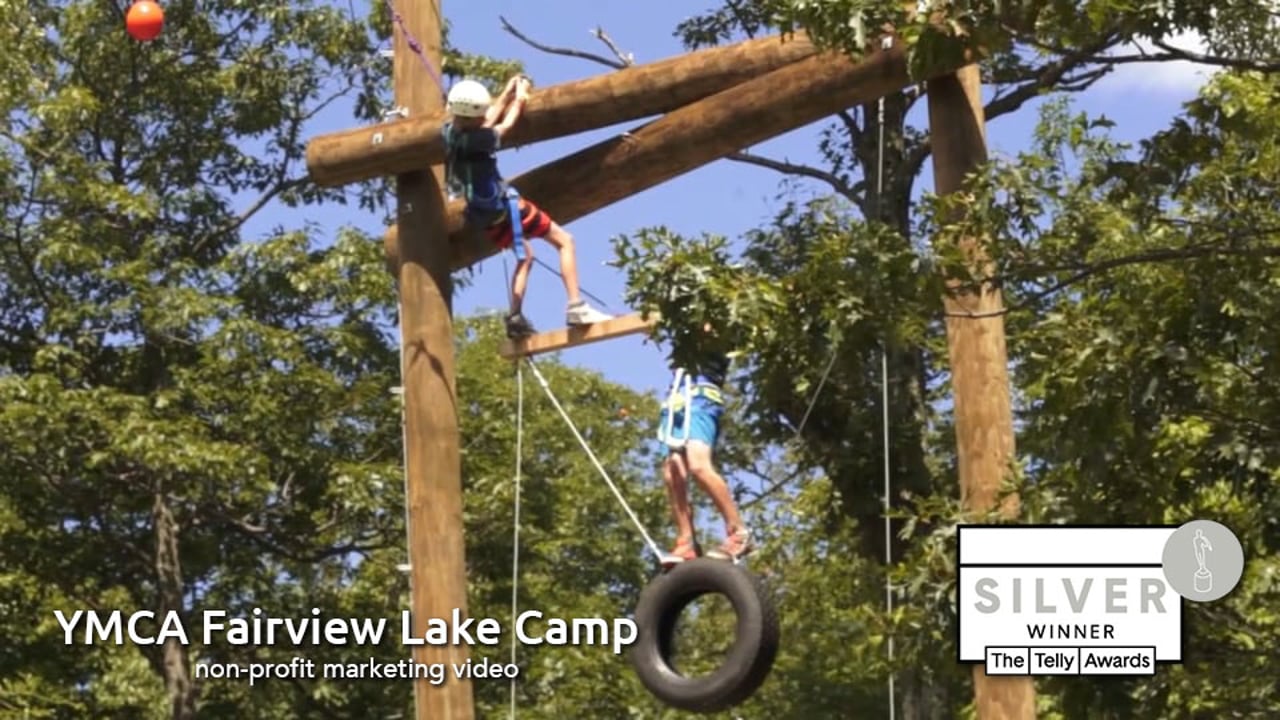
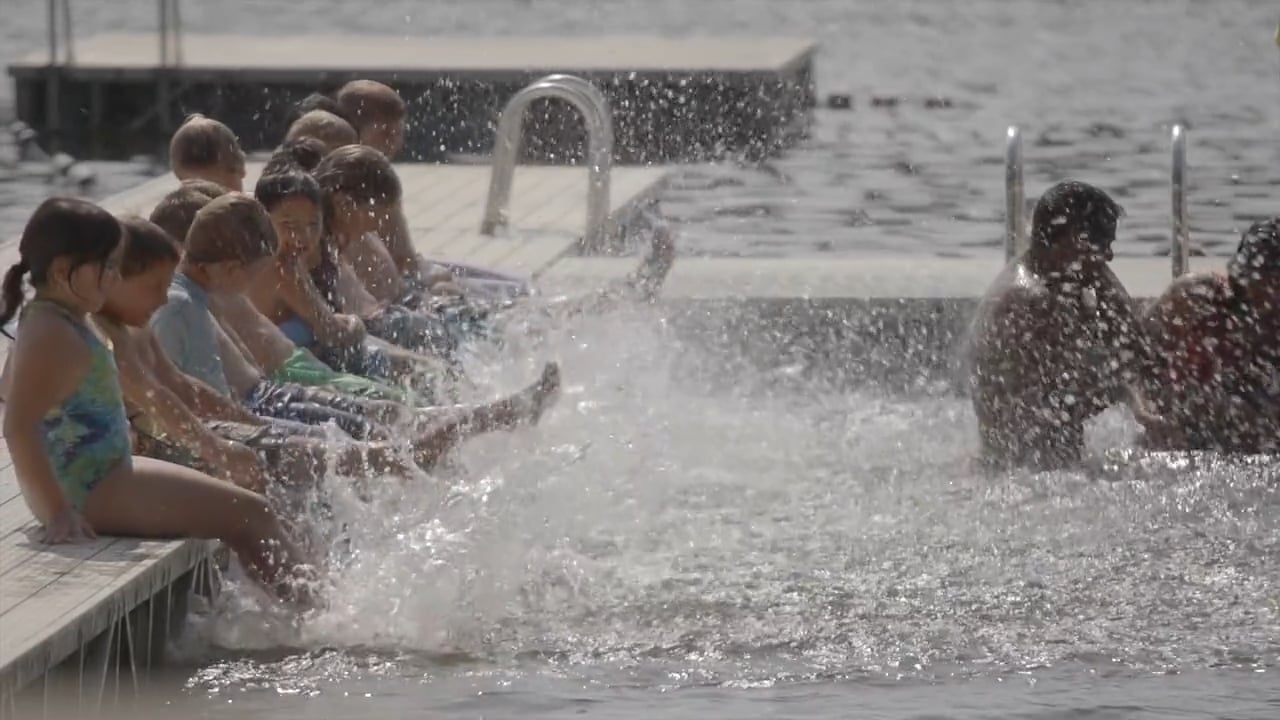
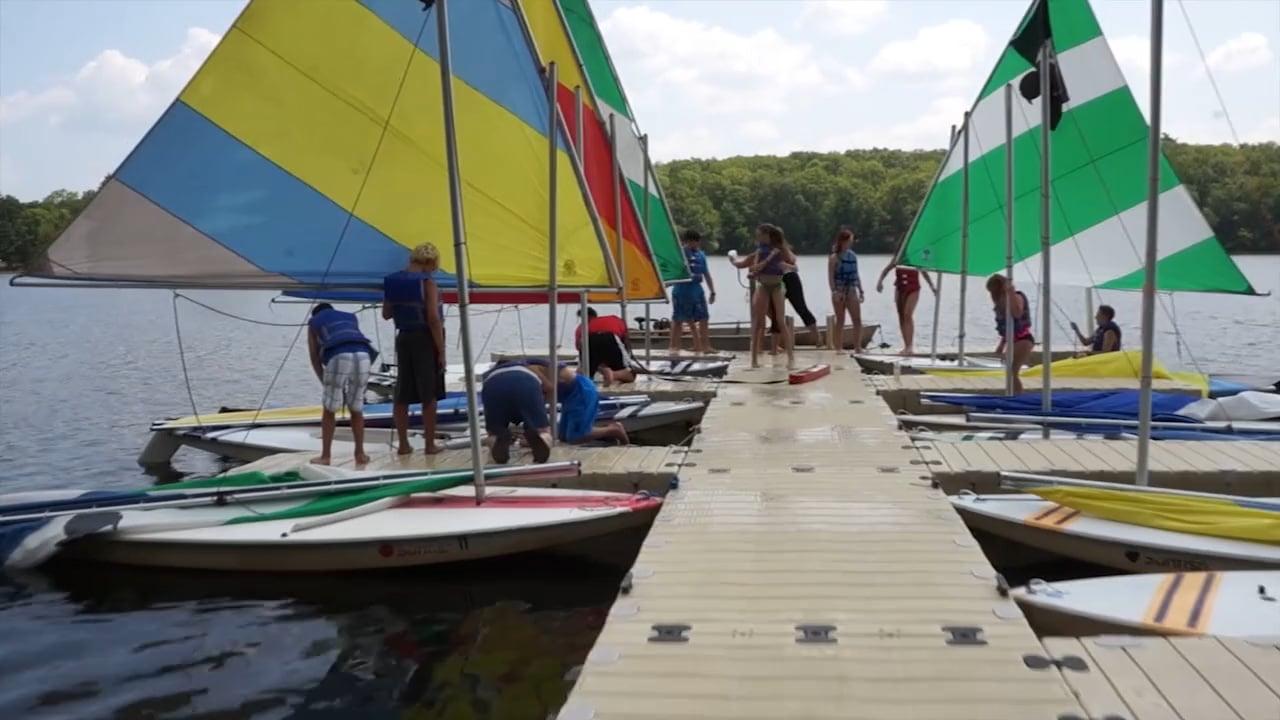
Our first job for the Metropolitan YMCA of the Oranges was Fairview Lake, their sleepaway camp operation. Blue Mountain Day Camp came out of it, then Sussex County, then the rest of the association. Seven films in all, and it started with the camp.
One camp turning into seven films across the association is the result. Nobody commissions six more of something that did not work.
The brief
Short films they could play to prospective parents. Two jobs at once: show a parent how much fun their child would have, and set their mind at ease that their child would be safe.
That is the whole assignment, and it is worth noticing that a parent is being asked to feel two different things in the same sixty seconds. Excitement is easy to film. Reassurance is not.
Each branch and camp got its own, because a parent choosing a day camp near home is not making the same decision as a parent sending a child away for weeks. The sleepaway film runs longer than the rest for exactly that reason.
Four years later a special needs school in New Jersey asked us for the same thing in different words: show what it feels like to be part of this place, and put parents at ease that their children will be well cared for. We screened them the camp film. That is what closed the meeting.
Filming children
Children cannot be directed. They will not repeat a moment because the shot was not ready, and the good ones happen when nobody is performing. Consent and safeguarding are not paperwork you sort out afterward. And there is a judgment call, constantly, about when to keep rolling and when to put the camera down.
This is most of what we do:
Fairview Lake YMCA Camps and Blue Mountain Day Camp, plus branches across the Metropolitan YMCA of the Oranges. Seven films, Telly Award winning.
The Phoenix Center and Inspire. Students with autism, multiple disabilities and behavioral needs. A Telly Award for each.
Children's Orchestra Society, since 1996, including the college audition recordings their students are judged on.
Three weeks touring the Philippines and Taiwan with Children's Orchestra students, following them the entire time.
Trust
A crew that turns up as strangers gets the version of your camp where every kid knows there is a camera. That is the version that looks like every other camp video. Getting past it is a matter of how you carry yourself around children, not how many days you book.
We have had a lot of practice at it. The clearest example is the Children's Orchestra tour of the Philippines and Taiwan, where we were with the students for three straight weeks. That is not how we shoot a camp, and a camp does not need it. It is simply the strongest proof we have that we are comfortable around kids for a sustained stretch, and that an organization was comfortable having us there.
Which is the question a camp director is entitled to ask and usually cannot. Your shoot will take a day or two. What matters is whether the people doing it know how to be around children while they do.
The hard one
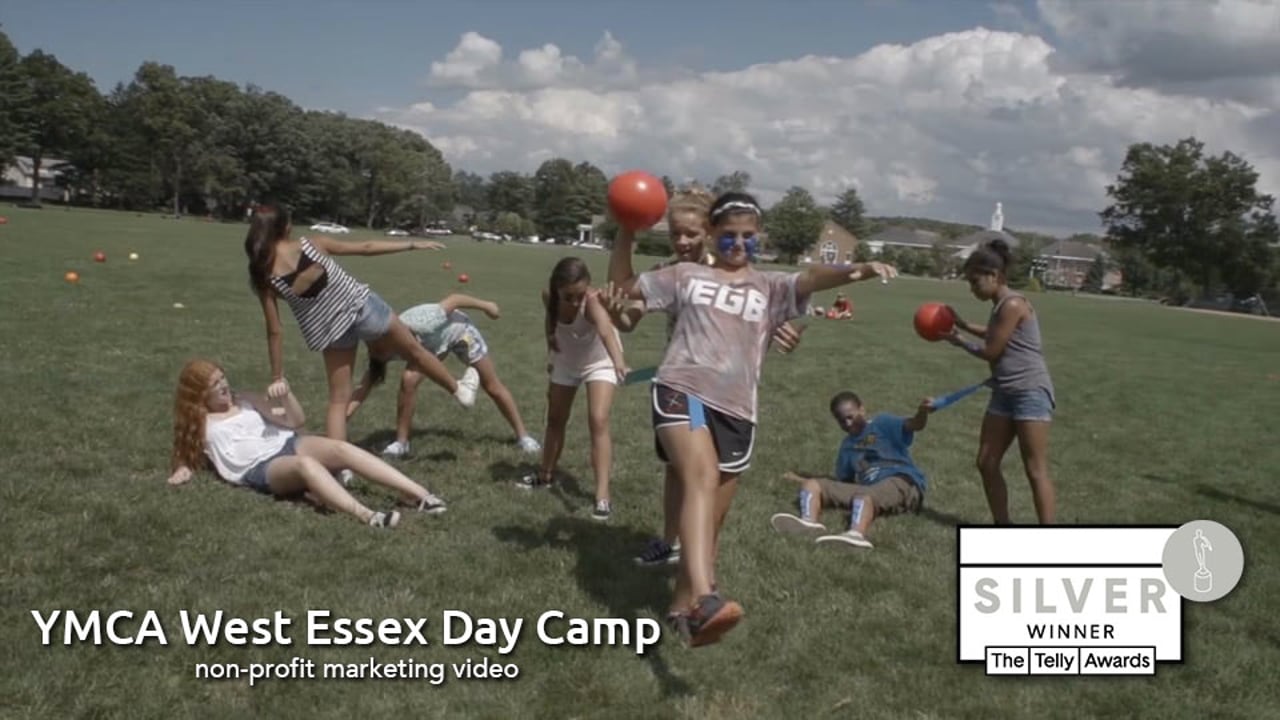
This shot captures children mid-play in extreme slow motion, then moves the camera around them in three dimensional space as though they are frozen in time.
The technical side is the easy half. The hard half is that the effect needs a real action held at exactly the right instant, and children are not actors. Ask a kid to hit a mark and you get a kid thinking about hitting a mark. What you need is genuine play, at full speed, arriving where the camera needs it.
The kids had a great time. Getting it to land convincingly took a lot longer than it looks.
It is on this page because it is the clearest example of the thing that actually separates crews who film children from crews who film adults and hope.
The harder rooms
Two of our Telly Awards are for films made inside schools for children with autism, multiple disabilities and behavioral needs. Those rooms demand more care than any camp will: more sensitivity to what a child can tolerate, tighter limits on what can be shown, and families who need to trust the result completely.
One of those films is still shown to prospective parents years after we delivered it, because it answers the same question your enrollment film has to answer.
One shoot, a season of content
You cannot reshoot in February. Whatever is captured during the season is what you have to market with until the next one.
So we plan for that. One production week produces the enrollment film, shorter pieces for the feed, material for the parent newsletter and footage banked for next year. We archive everything and you can use any of it. You pay for the edit, never for another shoot.
That is Story Stacking, and camps are the clearest case for it of any client we work with.
Where we are
Our office is in Monticello. The Catskills hold one of the densest concentrations of sleepaway camps anywhere in the country, and most of them are a short drive from us.
We also work across the Hudson Valley, northern New Jersey, Long Island and further out. Our crew has filmed in India, the Philippines and Taiwan, so a camp in Maine or the Poconos is not a problem. Travel is a line on the quote, not a limit.
Tell us when your session runs and what enrollment needs to look like next year. The planning happens before the campers arrive, which is the whole point.
Most of these begin as a fifteen-minute call.
Last updated September 2026 · Nimble Dragon Studios · Monticello, New York