Most advice about nonprofit video assumes you can film the people you help. Find the right person, sit them down, let them tell their story. It is good advice. It is also useless to a domestic violence shelter, a children’s mental health program, a free clinic operating inside hospitals, a special needs school, or an immigration legal service.
That is not a niche problem. It is close to half the sector. And the answer is not to make a weaker film. It is to make a different one.
The wrong answers
Organizations in this position tend to reach for one of four things.
Stock footage of people who are not their clients, in rooms that are not their rooms. Donors can tell, and once they can tell, they stop trusting the rest of the film.
Blurred faces and distorted voices. This protects the person, but it also signals danger and shame to the audience. The film ends up making the viewer uncomfortable about the client rather than moved by them.
Actors reading composite stories. Legal, sometimes necessary, and almost always flat, because the audience is being asked to feel something for a performance.
Or the film that avoids people entirely: hallways, hands, a door closing, a logo, statistics. It shows nothing, and nothing is what the audience feels.
Each of these is a way of answering the wrong question. The question is not how to hide the client. It is who carries the film.
Someone else can carry it
A fundraising film needs one real person the audience connects to. Nothing about that requires the person to be a current client.
A staff member who has done the work for fifteen years can carry it. So can a long-term volunteer. An alumnus who left the program a decade ago and chooses to speak. A family member telling their side, with the client’s consent but without the client on camera. A board member who was once served by the organization and says so. A nurse. A teacher. The person who answers the phone at two in the morning.
What matters is that the person is real, that they are specific, and that the audience gets to spend three minutes with them. The organization’s proximity to the work is what makes them credible. The story they tell is still the client’s story, seen from one step away, and that step is often what makes it possible to tell it at all.
The audience does not need to see the person who was helped. They need to believe the help was real.
When the client chooses to carry it
Sometimes the person who was served wants to speak. That is their right, and it makes for the strongest film there is. The job then is to move the protection off the person and onto everything around them.
That means the location, the background, the details in the room, the route the crew took to get there. Nothing on screen that places them anywhere. Nothing in the film that a specific person could use to find them. The subject speaks openly because they chose to. The organization makes sure that choice does not cost them anything afterward.
Filming the work without filming the faces
When the client cannot appear, the film still has to show that the work exists. That is a craft problem, and it has craft answers.
Film the place from the inside, not the outside. Exteriors and street views identify locations; a hallway, a desk, a window with the blinds down do not. Frame tight. Let the space be felt rather than mapped.
Film the work being done to no one in particular. A clinician setting up a room. Supplies being unpacked. A phone being answered. A car being loaded. The audience fills in the person who is not there.
Put the weight on sound. A voice in a room, a door, footsteps, the ambient noise of a place where something is happening. Sound carries presence without carrying identity.
Consent that means something
Everyone in this position already has a consent form. The form is not the point.
Consent that protects both the person and the organization looks like this: the subject knows what the film is for and where it will play before filming starts. The subject sees the film before it is public. The subject can withdraw, and the organization has decided in advance that it will honor that even if it costs the edit. Nobody is asked to relive the worst day of their life for a paddle raise.
That last one matters more than it sounds. There is a kind of nonprofit film that shows a person at their lowest so the audience feels terrible, and then presents the organization as the rescuer. It raises money in the short term. It also strips the dignity from the person who trusted you, and donors tire of being made to feel guilty. The organizations that have to be careful about identity are usually the ones that already understand this. The film should reflect it.
What this looks like in practice
We have been working under these constraints since our first nonprofit client. In 2012 we made a gala film for Safe Homes of Orange County, now Fearless! Hudson Valley, a domestic violence organization. A survivor chose to carry that film. The subject matter was as sensitive as it gets, so the protection went into the production: filming in undisclosed locations, with nothing on screen that could reveal where those locations were. She told her story. The film made sure nobody could use it to find her.
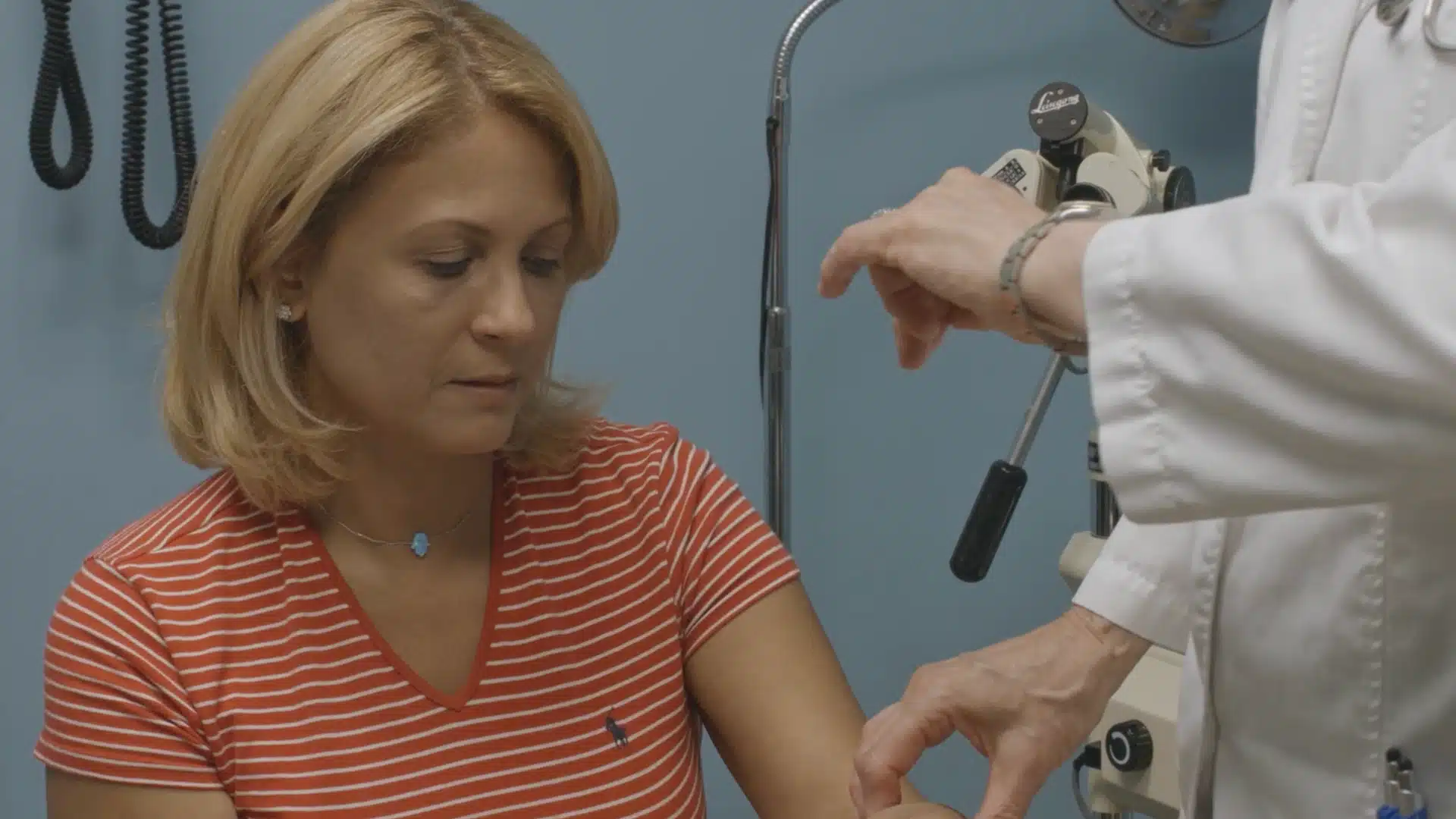
Between 2015 and 2019 we made films for the Bergen Volunteer Medical Initiative, a free clinic whose volunteer specialists see patients across five hospitals in Bergen County. That meant filming inside working hospitals under HIPAA. Areas you will not be entering. Consent rules that are not negotiable and should not be. Clinicians who cannot stop what they are doing because a shot needs another thirty seconds. A healthcare nonprofit can tell within ten minutes whether the crew in the building has done this before.
Neither of these was an exception to how we work. They were the work.
How we do it
The method behind all of this is on our nonprofit video production page: one real person, the story settled before filming, dignity treated as a design decision rather than a disclaimer. For teams that will be filming this material themselves, the visual storytelling workshop spends a full session on the craft of telling a story when you cannot show the face.
If you would rather read the thinking first, Stories That Move Mountains is our guide to fundraising video for nonprofits. Pay what you can afford, including nothing.